
Design · Specification · Application
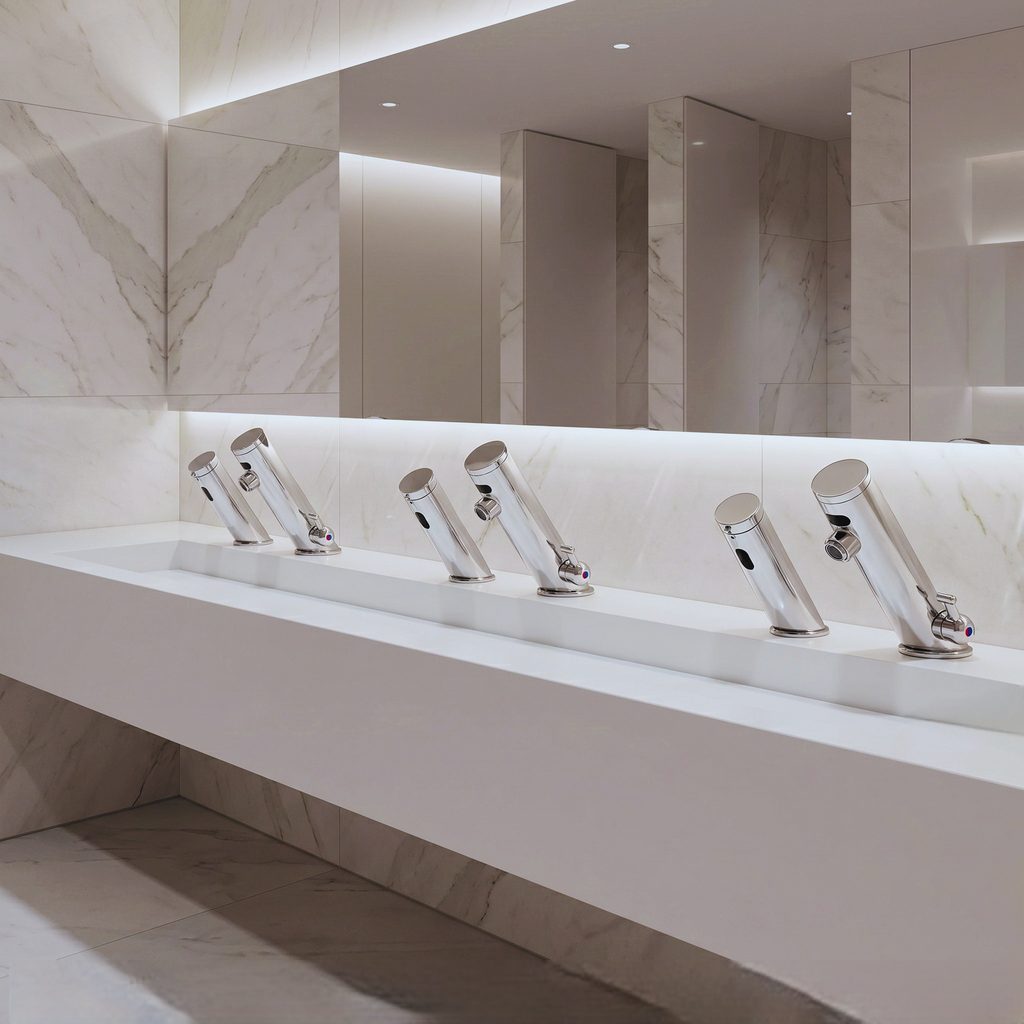
Commercial Touchless Faucets for Better-Planned Restrooms
Explore sensor faucets through basin fit, power options, sensing, water efficiency, service access, and commercial restroom applications.
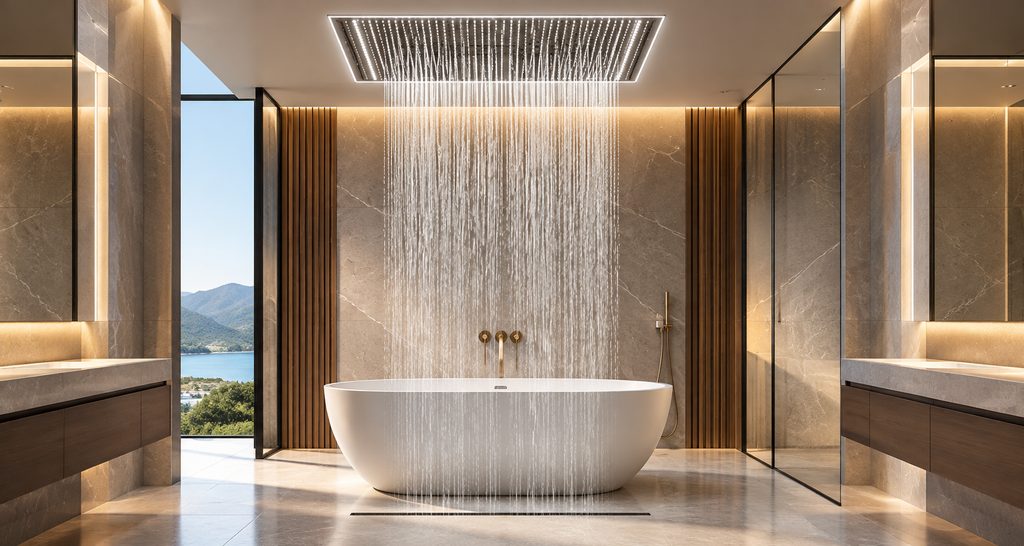
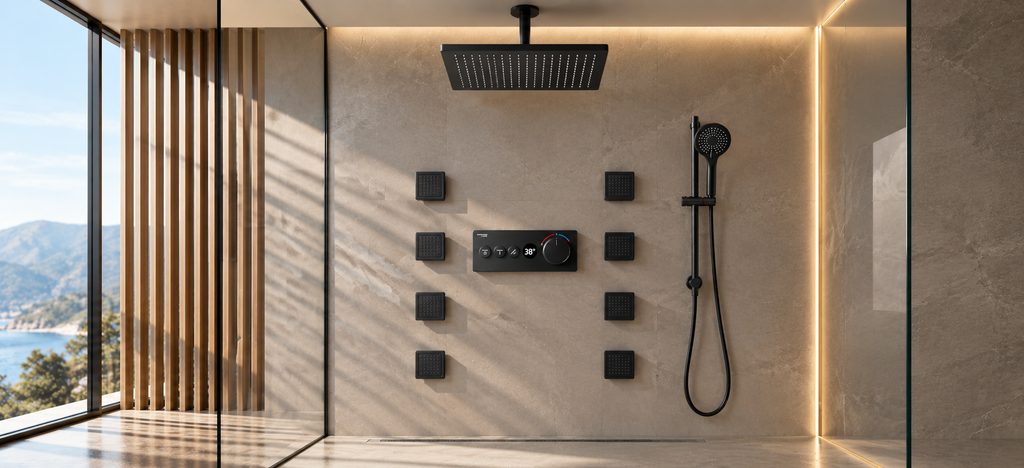
Better bathrooms begin with informed choices
Bathroom Fixtures.
Beyond the Finish.
Bathroom fixtures include faucets, showers, sinks, vanities, toilets, bathtubs, and restroom accessories. Hechinger Online helps readers compare how these products fit, function, install, and perform before a residential or commercial bathroom decision is made.
Hechinger Online brings bathroom products into context: how they fit, how they function, where they belong, and what to check before specifying them.
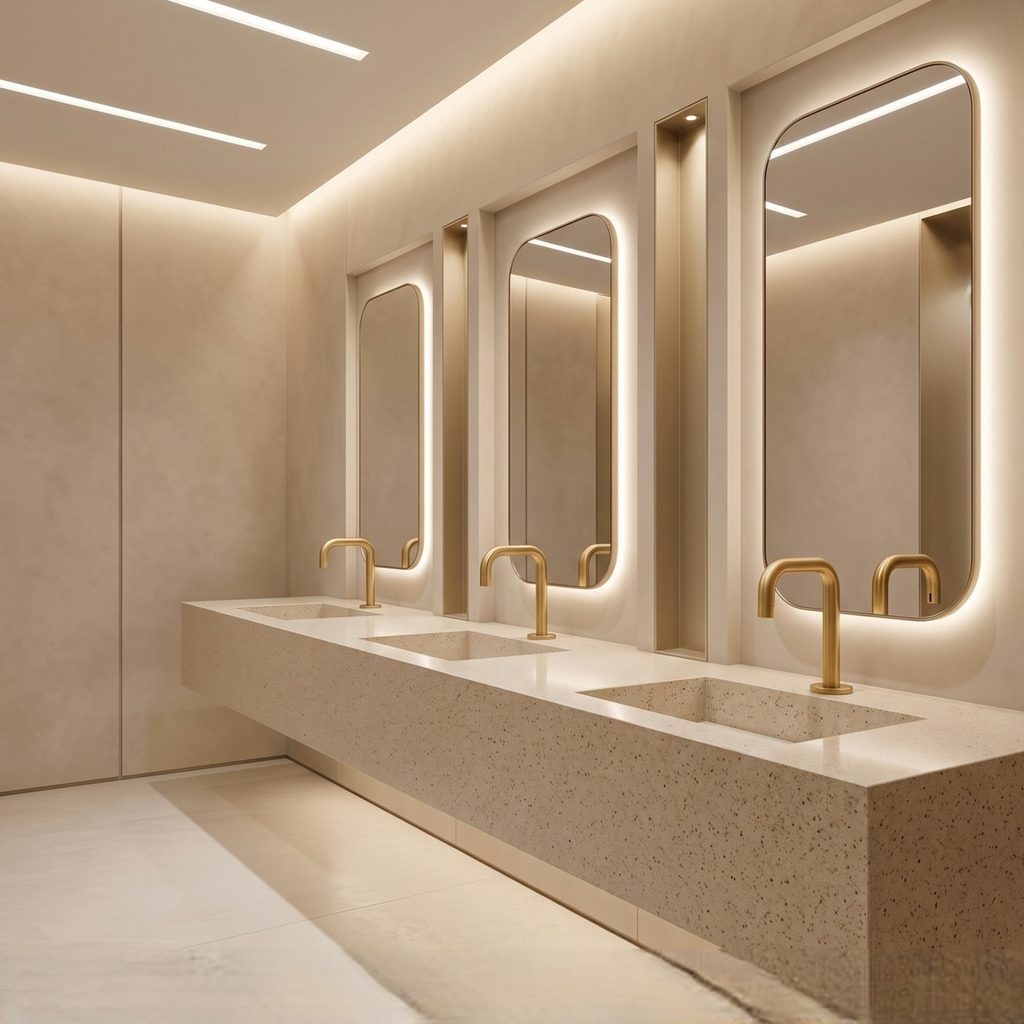
Materials, dimensions, controls, mounting, and maintenance.
Residential bathrooms, hospitality, workplaces, and public facilities.
Compare documented features, installation needs, and ownership considerations.
Explore bathroom fixtures
Begin with the fixture family, then consider the surrounding space and the people who use it. Browse the full bathroom fixture guide.
Bathroom faucets
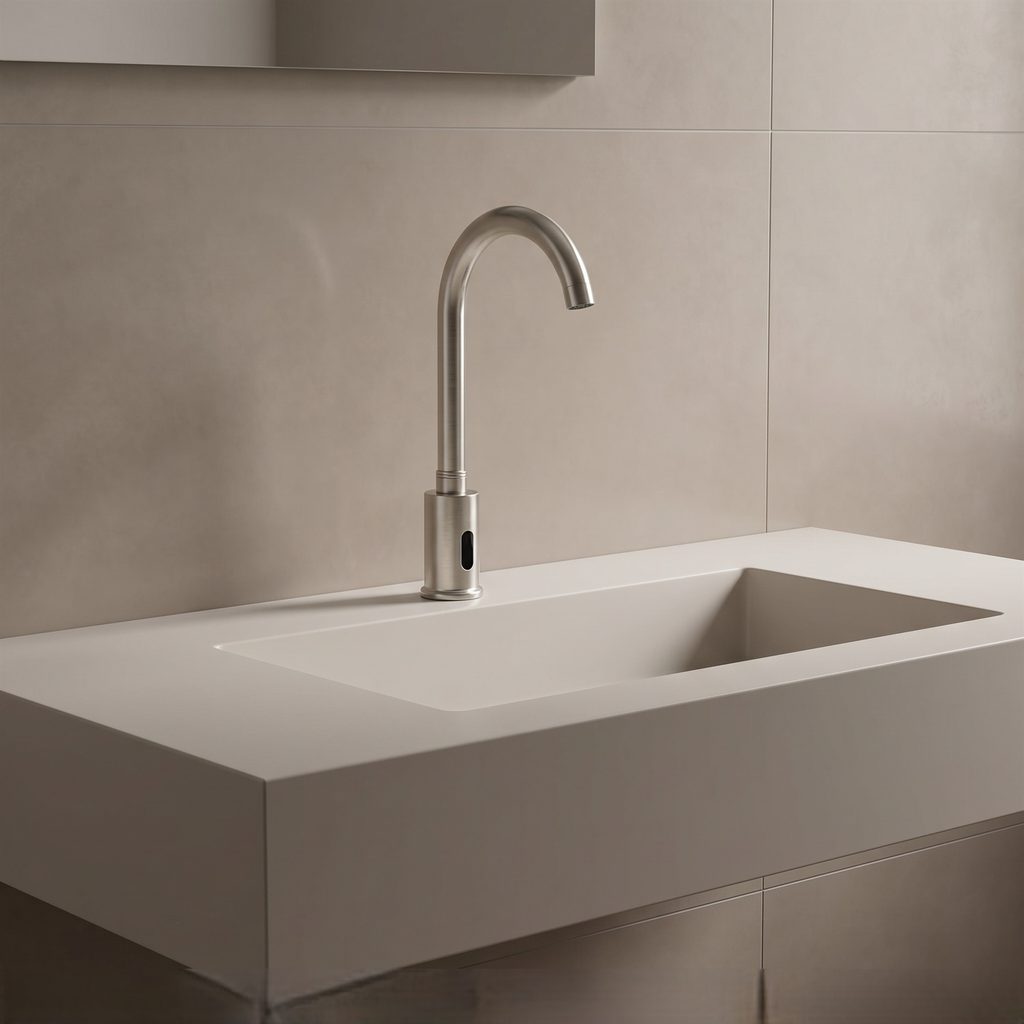
Deck-mounted, wall-mounted, manual, and touchless faucets, considered alongside basin geometry and installation requirements.
Read More Read Less
Compare spout reach, outlet height, mounting holes, supply connections, and control access. For sensor faucets, review power options, detection adjustment, mixing arrangements, and access to the solenoid and filters.
Shower heads & systems
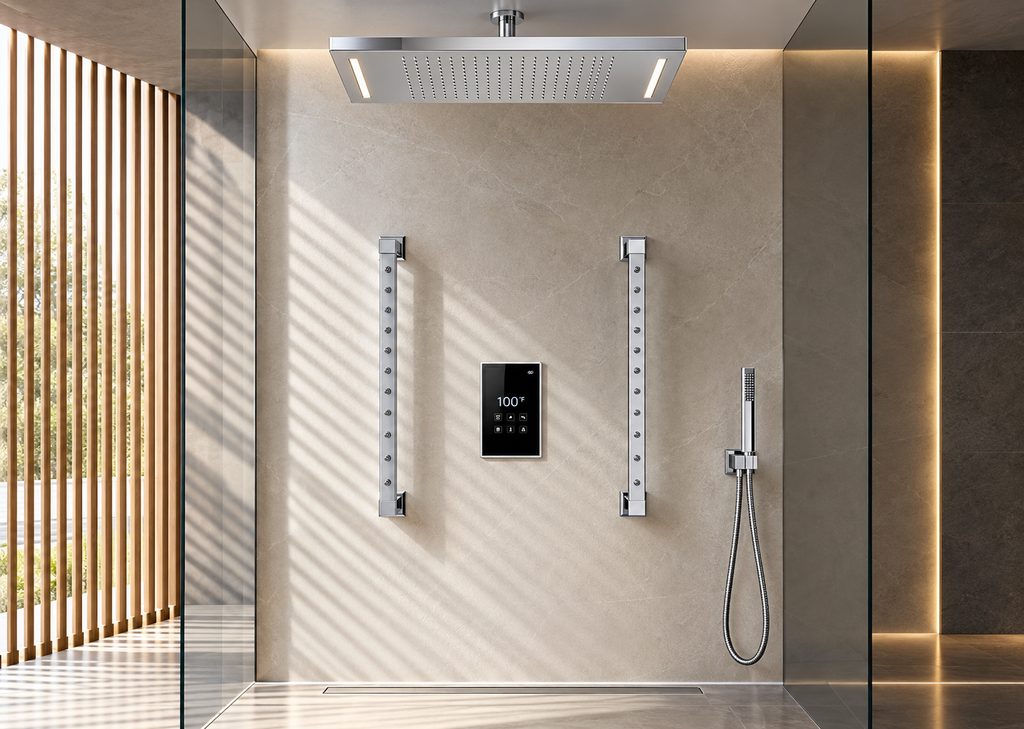
Rain heads, handheld showers, body sprays, valves, and complete systems, with attention to coordination and practical use.
Read More Read Less
Check the flow demand of each outlet and whether the valve supports the intended combination of functions. Review supply capacity, operating conditions, rough-in depth, component compatibility, and maintenance access before choosing the finish.
Sinks & vanities
Vessel, undermount, wall-hung, and integrated basins, paired with storage, countertop, and faucet decisions.
Read More Read Less
Coordinate basin depth, faucet projection, countertop thickness, drain configuration, and mounting support. Consider splash containment, cleaning access, storage needs, and clearances around the vanity rather than selecting each item separately.
Toilets, bidets & flush controls
Floor-mounted and wall-hung toilets, bidet fixtures, and manual or sensor-operated flushing arrangements.
Read More Read Less
Confirm rough-in, outlet configuration, carrier requirements, water supply, and access to concealed components. Compare installation instructions and documented performance for the exact model, including electrical needs for powered bidet functions.
Bathtubs & bath fillers
Freestanding, alcove, and drop-in baths, with coordinated fillers, drains, and access for installation.
Read More Read Less
Review usable bathing dimensions, floor support, drain position, water capacity, and filler reach. Powered or jetted baths require additional coordination for electrical service, equipment ventilation, cleaning, and access to pumps or controls.
Accessories & restroom equipment
Mirrors, lighting, towel storage, grab bars, soap dispensers, hand dryers, and the details that complete the space.
Read More Read Less
Plan mounting locations around circulation, reach, cleaning, and wall support. In shared restrooms, compare refill methods, consumable availability, power requirements, and service access alongside appearance and durability.
Read the specification before the finish
A product photograph shows appearance. Technical documents help establish whether it suits the project. Open the technical and specifications guide.
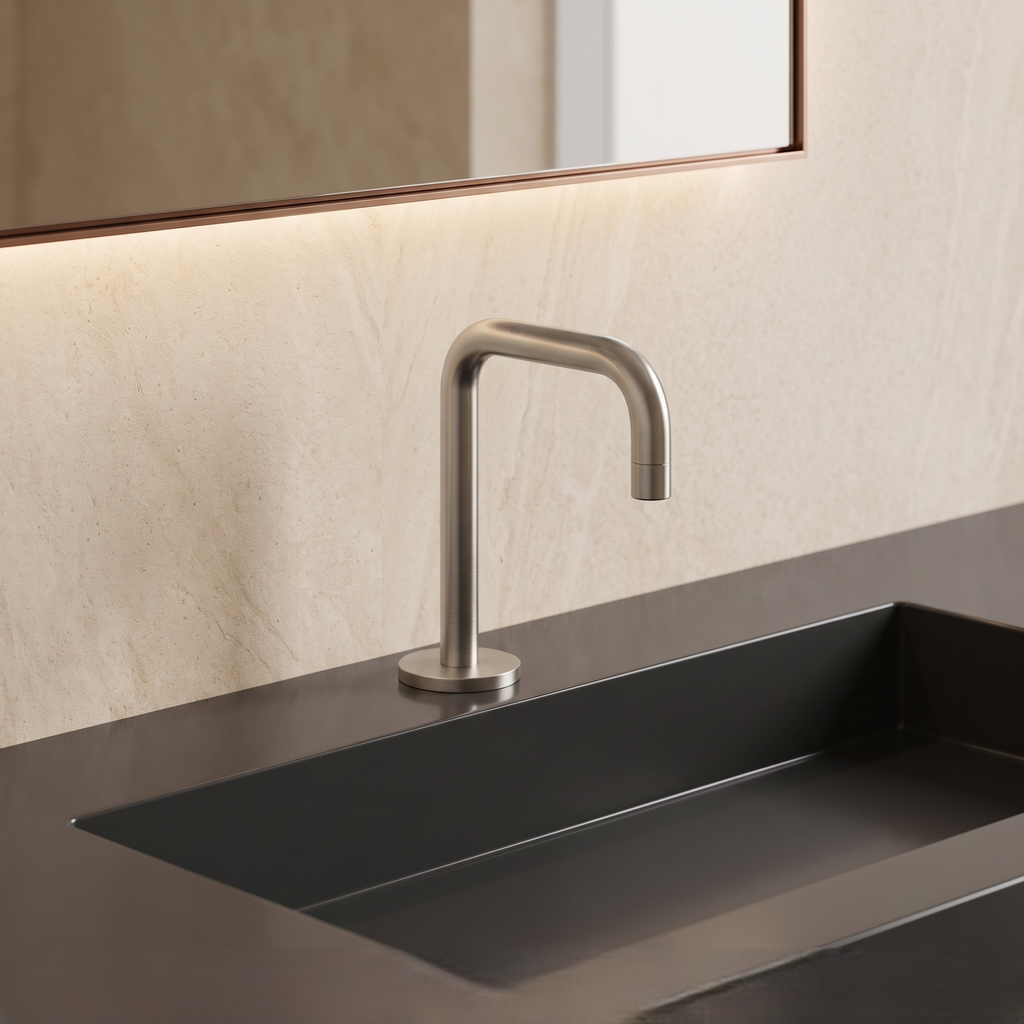
The specification desk
Build a fixture schedule that can be checked
Record the exact model, finish, mounting arrangement, dimensions, connections, and required accessories. Keep the product data sheet and installation instructions with the selection.
Compare operating requirements as carefully as visible features. Flow, pressure, temperature control, electrical supply, and service access can affect whether the chosen arrangement works as intended.
Read More Read Less
Treat a family brochure as an introduction, then confirm each requirement against documentation for the selected model and configuration. Where compliance matters, record the relevant certification or listing evidence and check the requirements that apply to the project location. A finish name or a general marketing claim is not a substitute for model-specific documentation.
| Selection area | What to record | Why it matters |
|---|---|---|
| Dimensions & mounting | Overall size, spout reach, outlet height, mounting holes, rough-in, and support. | Coordinates the fixture with the basin, countertop, wall, and available space. |
| Water performance | Published flow rate, stated test conditions, operating pressure, and supply requirements. | Supports meaningful comparisons and helps identify supply constraints. |
| Temperature & controls | Valve type, mixing method, control positions, and compatible outlets. | Connects the chosen functions to the intended installation and use. |
| Power & sensing | Battery or wired supply, sensor configuration, equipment locations, and wiring needs. | Defines installation and maintenance requirements for electronic fixtures. |
| Materials & finishes | Published material information, finish designation, and cleaning instructions. | Helps compare appearance, care requirements, and suitability for the environment. |
| Documentation & service | Exact model, installation guide, relevant listings, warranty terms, and replacement parts. | Provides a traceable basis for review, installation, and future maintenance. |
Compare brands with a clear brief
Start with the application and required features. Then compare the documentation behind each candidate. Explore the brands guide.
Brand research
A starting point for manufacturer research
Explore official product information from bathroom fixture manufacturers. Evaluate the exact product and configuration rather than assuming every model shares the same features.
Manufacturer links are research resources, not rankings or endorsements.
Comparison framework
Compare what changes the decision
Use the same project requirements for every candidate so the comparison stays useful.
- Model-specific dimensions and installation compatibility.
- Documented operating performance and required components.
- Cleaning instructions and maintenance access.
- Replacement parts, warranty terms, and regional support.
- Relevant compliance evidence for the intended application.
Read More Read Less
Keep product claims separate from independently verified evidence. A review should identify its sources, its scope, and any commercial relationship relevant to the featured products. Where documentation is incomplete, make the missing information visible rather than filling the gap with an assumption.
The right fixture for the setting
Different spaces place different demands on controls, cleaning, durability, and service access. Explore fixture applications.
Homes & renovations
Coordinate everyday comfort, available space, storage, and the existing plumbing layout.
Read More Read Less
Begin with measured conditions, including countertop dimensions, wall construction, drain locations, and access to supplies. Choose the fixture arrangement around the users and the practical scope of the renovation.
Hotels & guest bathrooms
Balance guest use, consistent operation, cleaning routines, and efficient maintenance.
Read More Read Less
Review controls from the guest’s perspective and service access from the maintenance team’s perspective. Consider part availability across rooms, cleaning instructions, and the implications of concealed installation.
Workplaces & public restrooms
Consider repeated use, sensor operation, replenishment, and access for servicing.
Read More Read Less
Coordinate faucets, soap dispensers, basins, and hand-drying arrangements as a complete handwashing sequence. Document power and refill needs so facilities teams can maintain the selected equipment.
Multifamily & shared amenities
Develop repeatable fixture selections that support installation consistency and future replacement.
Read More Read Less
A coordinated model schedule helps installers identify the correct configuration and maintenance teams source compatible parts. Consider both private bathrooms and the different demands of shared amenity spaces.
Healthcare & care settings
Assess fixture choices against the facility’s operational brief and applicable requirements.
Read More Read Less
Review the proposed arrangement with the appropriate project and facility specialists. Cleaning, water management, temperature controls, user needs, and maintenance procedures deserve explicit coordination.
Accessible & adaptable bathrooms
Plan clearances, reach, controls, support, and usability as part of the room layout.
Read More Read Less
Review the full installed arrangement against the accessibility requirements that apply to the project. Product descriptions alone do not establish that a completed bathroom meets those requirements.
Design ideas with practical substance
Explore emerging approaches through installation, usability, and long-term care.
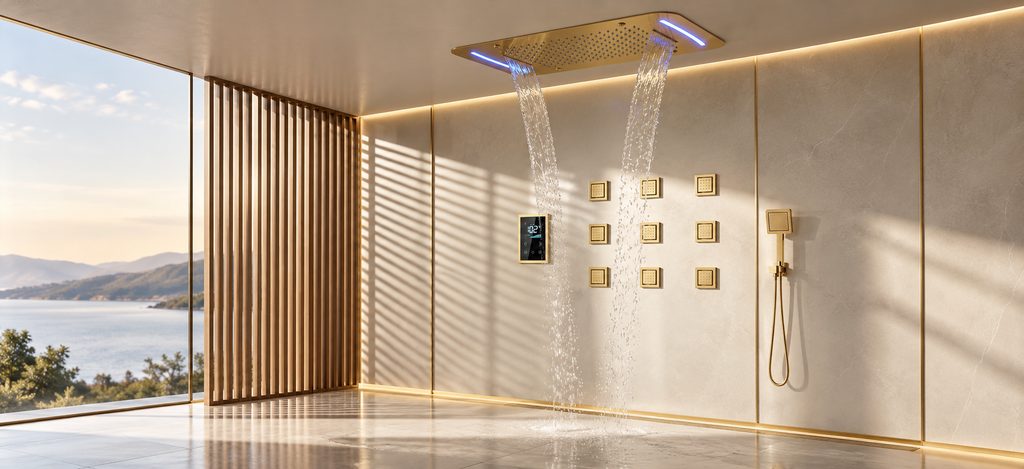
Touchless & connected features
Look at power, adjustment, cleaning, and repair alongside the convenience of electronic controls.
Read More Read Less
Identify what the electronic function adds to the application and what it requires in return. Confirm component compatibility, access to power supplies, and support for replacement electronics.
Water-conscious bathroom planning
Compare documented flow or flush information in the context of actual use and fixture compatibility.
Read More Read Less
Assess water use at the system level. Multiple shower outlets, user patterns, and installation conditions can matter as much as a single published flow figure.
Finishes, proportions & visual continuity
Coordinate fixture shapes and finishes while keeping basin fit and cleaning access in view.
Read More Read Less
Check manufacturer finish references rather than relying only on screen images. Compare care instructions and the availability of matching accessories before committing to a room-wide finish.
Serviceable design
Keep replaceable parts, equipment access, and maintenance routines in the design conversation.
Read More Read Less
A visually restrained bathroom can still require careful coordination behind the wall or below the counter. Include service locations in the planning process so essential components remain accessible.
About Hechinger Online
A bathroom fixture journal for readers who want to understand the choices behind the finished room. Learn more about Hechinger Online.
Our editorial focus
Hechinger Online covers bathroom fixtures, brands, technical specifications, applications, and design trends. The focus is practical: connecting product information to the decisions involved in planning, selecting, installing, and maintaining a bathroom.
Coverage spans faucets, showers, sinks, vanities, toilets, bidets, bathtubs, accessories, and commercial restroom equipment.
How to use this journal
Use the guidance to frame your questions and organize your research. Confirm final selections with current manufacturer documentation and the requirements that apply to the installation.
Read More Read Less
Photographs on this page illustrate bathroom settings; they do not verify the specifications or performance of a particular product. Brand references help readers locate manufacturer resources. Technical decisions should use documentation for the exact model, finish, and configuration under consideration.